 Feb 3, 2026
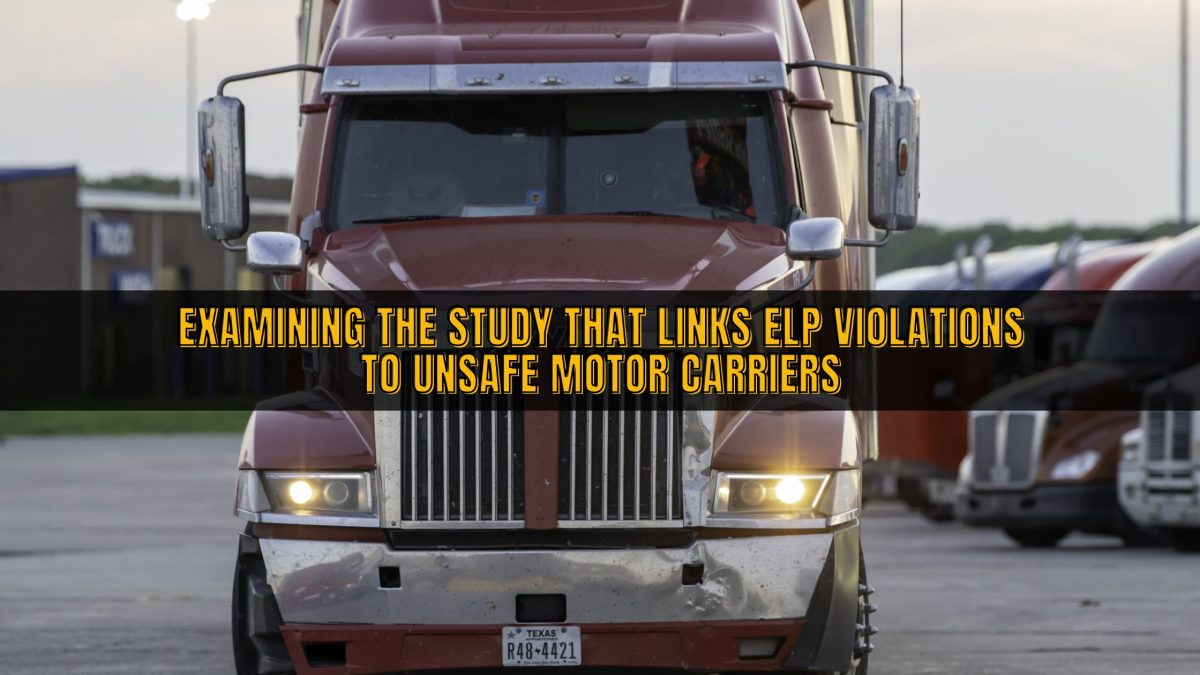
Examining the Study That Links ELP Violations to Unsafe Motor Carriers
A new industry study suggests carriers with ELP Violations are significantly more likely to be flagged for safety risks. This article examines how the research was conducted and what a link between logging violations and unsafe operations really means. You’ll learn the key findings, where the data is strongest (and where it isn’t), and how these insights should shape compliance strategies. Expect practical takeaways for carriers, shippers, and safety managers evaluating risk.
Understanding the New Research on Driver Safety
Recent academic research has identified a statistically significant connection between truck drivers who violate English-language proficiency (ELP) standards and an increase in safety violations. This study serves as a wake-up call for the logistics industry, highlighting a potential blind spot in current fleet management practices.
The findings suggest that drivers struggling with English are more likely to be involved in incidents that lower a carrier's safety rating. However, the researchers explicitly caution against assuming that language skills are the direct cause of these accidents.
Instead, the study encourages industry stakeholders to look at the broader operational context surrounding these drivers. It is crucial to determine if the correlation stems from a lack of comprehension or systemic exploitation by predatory carriers.
The Urgency of the Findings
Truck-related accidents result in a staggering number of injuries and fatalities on American highways every year. Given these high stakes, identifying every possible risk factor is a moral and economic imperative for the transportation sector.
Co-authored by Alex Scott, an associate professor of supply chain management at the University of Tennessee, the study emphasizes the need for immediate policy evolution. The goal is to formulate regulations that effectively identify unsafe behaviors before they result in a crash.
Scott argues that we must move beyond surface-level assumptions and analyze the root causes of safety failures. This approach ensures that regulations target actual risks rather than simply penalizing drivers for demographic characteristics.
Investigating the Safety Gap
Scott advocates for a rigorous, data-driven investigation into the performance of drivers who have been cited for ELP violations. The central question is whether these individuals are inherently less safe than their fluent counterparts.
Furthermore, the research scrutinizes the carriers that employ these drivers to see if they exhibit poorer safety records overall. This dual focus helps distinguish between individual driver error and company-wide negligence.
If carriers employing non-English speaking drivers consistently underperform, it points to a failure in management and training. This distinction is vital for drafting fair and effective enforcement policies.
The Methodology Behind the Study
To conduct this analysis, Scott and his team concentrated on specific, high-impact safety categories monitored by the Federal Motor Carrier Safety Administration (FMCSA). These specific metrics provide the clearest picture of a carrier’s operational integrity and risk profile.
The researchers focused on three critical BASICs: Unsafe Driving, Vehicle Maintenance, and Hours of Service (HOS) Compliance. These categories were chosen because they are the most indicative of imminent crash risks.
By filtering out administrative or paperwork errors, the study honed in on behaviors that physically endanger the public. A higher score in these BASIC categories directly correlates with poorer safety performance and higher accident probability.
Analyzing the Inspection Data
The study utilized a robust dataset comprising roadside inspection records from May 1 to September 21. This specific timeframe provided a snapshot of enforcement trends during a period of heightened regulatory scrutiny.
The findings were stark: inspections involving ELP violations displayed a significantly higher frequency of concurrent safety issues. In fact, these inspections had 2.5 times the frequency of other safety violations compared to a control group.
Even more concerning was the rate of serious infractions found during these specific stops. The data showed nearly three times the rate of serious driver infractions when an ELP violation was present.
Carrier Safety Ratings and "Alert" Status
The study indicated that carriers with a history of ELP violations generally received poor safety ratings from the FMCSA. This correlation suggests that a driver’s inability to speak English often signals broader non-compliance issues within the company.
This trend was particularly evident in the critical categories of vehicle maintenance and unsafe driving. These are the areas where negligence most quickly translates into mechanical failure or roadway incidents.
Many of these carriers frequently fell into the FMCSA’s "alert" status. This designation signifies significant, repeated safety violations that require immediate intervention by federal regulators.
The Impact of the Trump Executive Order
The research noted a "steady increase" in enforcement activity during June and July of the study period. This uptick followed an April executive order from President Trump aimed at tightening English language requirements for commercial drivers.
This executive action placed a spotlight on the ELP requirement, which had previously been enforced with varying degrees of strictness. The directive signaled a shift toward "law and order" policies within the Department of Transportation.
However, the response to this federal mandate was not uniform across all jurisdictions. The data revealed a fragmented landscape of enforcement that varied wildly from state to state.
The California Anomaly
Notably, California exhibited a decline in ELP violation citations after the executive order was issued. This stands in sharp contrast to the national trend and highlights the political divide in trucking enforcement.
This decrease suggests that state-level policy priorities in California may be overriding federal directives regarding immigration and language enforcement. For carriers operating in the West, this creates a confusing regulatory patchwork.
Drivers moving between jurisdictions may face strict scrutiny in one state and leniency in another. This inconsistency makes compliance management difficult for interstate fleets.
Disparities in Enforcement Rates
The study highlighted significant disparities in ELP violation rates among different states and inspection agencies. This variance raises questions about the standardization of roadside inspections across the country.
Federal agents were found to be much more aggressive in citing language violations than their state counterparts. The data showed federal agents reporting ELP violations at rates over 3.5 times higher than state inspectors.
This gap was most pronounced when comparing federal activity to states like Wyoming. Wyoming had the highest reported state rate, yet it still trailed significantly behind federal enforcement numbers.
Deep Dive: Vehicle Maintenance Scores
Carriers with ELP violations were found to have poorer safety ratings on average compared to those without such violations. The data paints a picture of fleets that cut corners on both personnel and equipment.
Specifically, the average BASIC score for the Vehicle Maintenance category among carriers with ELP violations was 9.06. This score is significantly worse than the industry average for compliant carriers.
A high score in this category implies that trucks are being operated with known mechanical defects. This includes issues with brakes, tires, and lights that directly compromise highway safety.
Unsafe Driving Category Analysis
The correlation extended to the Unsafe Driving category, where carriers with ELP violations also performed poorly. This category tracks moving violations such as speeding, reckless driving, and improper lane changes.
The average Unsafe Driving category score for these carriers was 6.23. Like the maintenance score, this number is indicative of subpar safety performance and a lack of driver oversight.
High scores in this category often result in increased insurance premiums and liability risks. It suggests that these fleets are prioritizing speed and delivery times over lawful operation.
Hours of Service (HOS) Compliance
One of the most critical findings related to Hours of Service (HOS) compliance rates. HOS rules are designed to prevent driver fatigue, which is a leading cause of catastrophic truck accidents.
HOS compliance rates for carriers with ELP violations were notably higher (worse) across all types of carriers. This trend held true even for for-hire interstate non-passenger operators, the largest segment of the industry.
This suggests that drivers who cannot communicate effectively are also those most likely to be overworked. They may be driving beyond legal limits, either due to ignorance or coercion.
Domestic vs. International Carriers
The research also compared the safety ratings of U.S.-based carriers to those based in Canada and Mexico. These foreign carriers are also monitored by the FMCSA for infractions occurring within U.S. borders.
The findings showed that U.S.-based carriers exhibited significantly poorer HOS compliance scores than their non-U.S. counterparts. This result challenges the common narrative that foreign trucks are less safe regarding logbook compliance.
Researchers attribute this to the longer operational distances typically covered by American drivers. Long-haul domestic routes provide more opportunities for fatigue and logbook violations to occur.
The Operational Profile of Non-U.S. Carriers
In contrast to domestic fleets, non-U.S. carriers generally undertook shorter trips for border crossings. These operations are often limited to "drayage" moves or short regional hauls near the border.
These movements typically occur during daylight hours and involve less total driving time per shift. This operational profile naturally reduces the likelihood of HOS violations due to fatigue.
However, this does not mean foreign carriers were superior in all metrics. Their performance in other safety categories told a different story.
Maintenance Issues in Foreign Fleets
While both U.S. and non-U.S. carriers exhibited substandard Vehicle Maintenance scores, the disparity was notable. Equipment quality remains a major concern for cross-border logistics operations.
The average maintenance score for non-U.S. carriers was particularly concerning at 12.25. This is significantly higher than the already poor scores found in the ELP-violation group of U.S. carriers.
This suggests that trucks crossing from Mexico or Canada may be older or less well-maintained. It highlights the need for rigorous mechanical inspections at ports of entry.
Correlation vs. Causation
Importantly, the study refrains from asserting a direct causal link between ELP violations and safety deficiencies. The authors are careful to distinguish between a driver's language skills and their driving ability.
Instead, the research highlights a strong statistical correlation that warrants further investigation. It implies that language proficiency is a "marker" for risk rather than the sole driver of it.
Blaming accidents solely on language ignores the complex ecosystem of the trucking industry. There are likely underlying factors that contribute to both the ELP violation and the safety failure.
Hypothesis 1: Regulatory Comprehension
The authors propose two potential explanations for this strong association. The first hypothesis centers on the complexity of the regulatory environment in the United States.
Drivers lacking English proficiency may struggle to comprehend the complex federal regulations governing trucking operations. The FMCSR (Federal Motor Carrier Safety Regulations) book is hundreds of pages long and written in technical legal language.
This barrier can lead to genuine misunderstandings regarding vehicle maintenance requirements and adherence to HOS rules. A driver may think they are compliant while unknowingly breaking the law.
The Challenge of Technical Literacy
Even for native speakers, understanding the nuances of electronic logging devices (ELDs) and pre-trip inspections is difficult. For someone with limited English, it can be nearly impossible without proper training.
If training materials are not provided in the driver's native language, the knowledge gap widens. This leads to unintentional violations that accumulate on the carrier's safety record.
This hypothesis suggests that better education and multi-lingual training resources could improve safety. It views the problem as one of access to information rather than malicious intent.
Hypothesis 2: Driver Exploitation
The second explanation offered by the researchers is darker and more systemic. It addresses the power dynamics between drivers and fleet management.
There is a distinct possibility that non-English speaking drivers may be exploited by unscrupulous carriers. These companies may specifically hire vulnerable drivers who are less likely to report safety concerns.
Management may press these drivers to operate unsafely or drive illegal hours. The drivers, fearing job loss or deportation, may feel unable to refuse these dangerous assignments.
Protecting Vulnerable Drivers
In such cases, the driver is a victim of a predatory business model. The lack of English proficiency makes it difficult for them to advocate for themselves or report violations to the DOT.
Proactive measures should be implemented to safeguard these drivers from exploitative management practices. This includes whistleblower protections and anonymous reporting channels accessible in multiple languages.
If exploitation is the root cause, then tightening ELP rules without addressing labor practices will fail. It would only punish the drivers while allowing the corrupt carriers to continue operating.
The Reddit Perspective: "Steering Wheel Holders"
On industry forums like Reddit (r/Truckers), this topic often sparks heated debate regarding "steering wheel holders." This slang term refers to unskilled drivers who are seen as lowering industry standards.
Many veteran drivers argue that carriers hire non-English speakers specifically to suppress wages. They believe these drivers are used as "cheap labor" to undercut established freight rates.
This sentiment fuels a desire for stricter enforcement of all CDL requirements, including language. However, it also highlights the economic anxiety currently pervading the trucking workforce.
Insurance Implications
For insurance providers, this study provides critical data for risk assessment. Carriers with a history of ELP violations may soon face higher premiums or policy cancellations.
Insurers are increasingly using granular FMCSA data to price their policies. A correlation between language violations and crash risk will not go unnoticed by actuaries.
This market pressure may force carriers to improve their hiring and training standards faster than regulations can. The cost of insuring an "alert" status carrier is becoming prohibitive.
The Role of Dispatchers
Dispatchers play a critical role in the safety ecosystem described in the study. If dispatchers cannot communicate effectively with drivers, safety instructions may be lost.
Miscommunication regarding route hazards, delivery windows, and load securement can lead to accidents. A language barrier between the back office and the cab is a major operational risk.
Progressive carriers are hiring bilingual dispatchers to bridge this gap. This simple step can significantly reduce the likelihood of misunderstandings and subsequent violations.
Training and Onboarding Gaps
The study results suggest a widespread failure in the onboarding process for many carriers. If a driver is on the road without understanding basic rules, the training program has failed.
Carriers often rush drivers through orientation to get trucks moving. This "churn and burn" approach leaves drivers ill-equipped to handle roadside inspections.
Investing in comprehensive, multi-lingual training is a safety investment. It ensures that every driver, regardless of background, understands the expectations of the U.S. roadway system.
The Future of CDL Testing
These findings may influence future changes to the Commercial Driver’s License (CDL) testing process. There is growing political pressure to ensure that the English requirement is rigorously tested, not just assumed.
Some advocates call for standardized English comprehension tests as part of the CDL skills exam. This would replace the current subjective assessment made by examiners or roadside officers.
However, such changes would likely face legal challenges and claims of discrimination. The balance between safety and accessibility remains a contentious policy debate.
Technological Solutions
Technology may offer a bridge for the communication gap identified in the study. Real-time translation tools and multilingual ELD interfaces can help drivers stay compliant.
However, federal regulations currently prohibit the use of translation apps during official inspections. The FMCSA requires drivers to communicate directly with officers without digital aid.
There is a debate over whether this rule should be updated to reflect modern technology. Allowing translation tools could improve interaction quality but might undermine the ELP standard.
The Legal Landscape for Carriers
Carriers involved in accidents with ELP-deficient drivers face significant legal liability. Plaintiff attorneys are increasingly citing these violations in "nuclear verdicts."
If a carrier knowingly hires a driver who cannot read road signs, it constitutes gross negligence. This opens the door for punitive damages that can bankrupt a trucking company.
Legal defense becomes difficult when FMCSA data clearly shows a pattern of non-compliance. This legal reality is driving many fleets to audit their own driver files more strictly.
Conclusion: A Call for Systemic Reform
The correlation between English proficiency violations and diminished safety ratings is a complex issue that demands a nuanced response. It is not enough to simply penalize drivers; the industry must address the root causes of regulatory confusion and driver exploitation.
As the data shows, safety is compromised when communication breaks down or when vulnerable drivers are pushed to their limits by unethical carriers. Moving forward, the focus must be on creating an environment where compliance is understood and safety is the non-negotiable standard for every driver on the road.
Stay Compliant and Informed with Labworks USA
The trucking industry is evolving rapidly, and staying ahead of regulatory changes is essential for your business's survival. If you want to stay updated with a wide range of trends, actionable insights, and innovative solutions in the trucking, freight, and logistics industry, stay connected to us.
Moreover, if you are looking for more information about drug and alcohol testing as a truck driver, visit Labworks USA. Our DOT Consortium's friendly team will be more than happy to discuss any concerns you may have and work with you to ensure you are always fully compliant, especially with random DOT drug and alcohol testing. Moreover, if you need help with FMCSA Clearinghouse registration, we can further support you.