 Jul 1, 2026
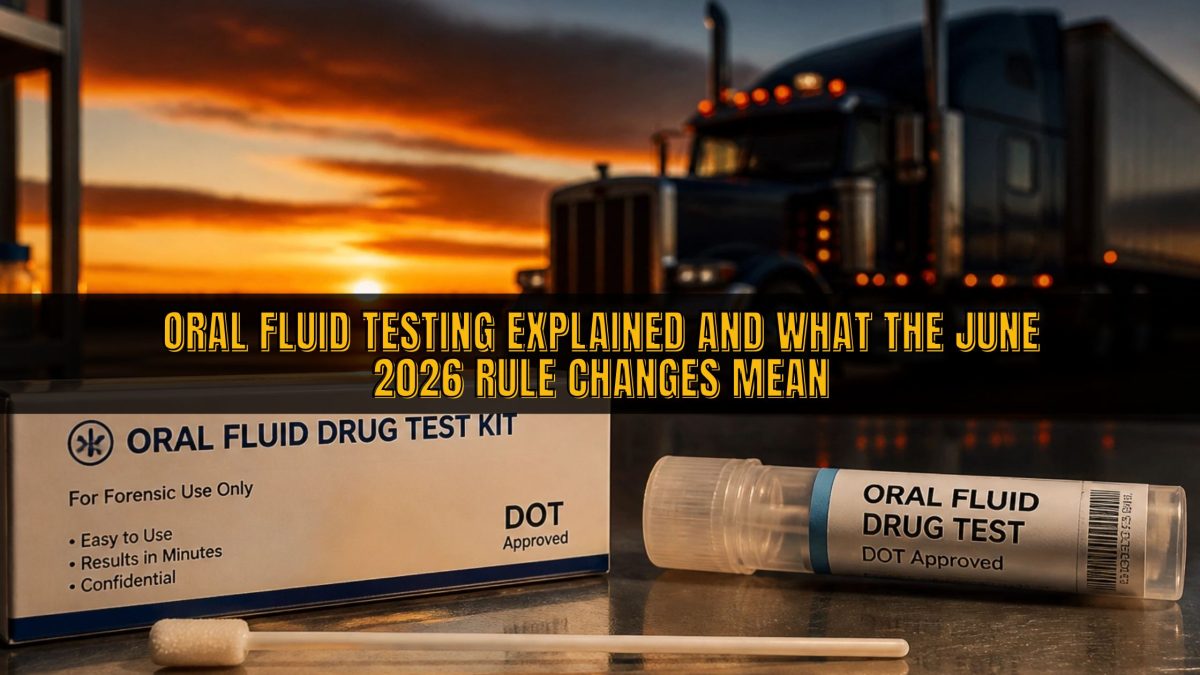
Oral Fluid Testing Explained: What the June 2026 Rule Changes Mean
For years, the gold standard for DOT drug testing has been the urine sample, a process that every driver and fleet manager knows by heart. However, the regulatory landscape is shifting beneath our feet as the Department of Transportation (DOT) moves toward a more flexible, multi-specimen approach. The introduction of oral fluid testing represents one of the most significant updates to Part 40 in decades, offering a modern alternative to the traditional cup.
While the initial authorization for oral fluid testing happened back in 2023, the practical application has been stuck in a holding pattern due to laboratory certification requirements. As of June 2026, new clarifying rules have officially taken effect to bridge the gap between regulatory theory and real-world implementation. This update provides the "green light" that carriers have been waiting for, though it comes with specific conditions that you need to understand to stay compliant.
The transition to oral fluid isn't just about changing how a sample is collected; it’s about improving safety and reducing the opportunities for cheating. Many carriers are eager to adopt this method because it simplifies the collection process and virtually eliminates the risk of sample tampering. By understanding the nuances of the June 2026 rule changes, you can position your fleet to take advantage of these benefits while avoiding the pitfalls of non-compliance.
UNDERSTANDING THE CORE OF ORAL FLUID TESTING

Oral fluid testing, often referred to as "swab testing," involves collecting a saliva sample from a driver's mouth using a specialized wand or collection device. This process is fundamentally different from urine testing because it happens in plain sight, with the collector observing the entire event from start to finish. Because the specimen is collected directly from the donor under direct observation, the chances of a driver using "synthetic" or substituted samples are nearly zero.
The science behind oral fluid is robust and focuses on the "parent drug" rather than the metabolites typically found in urine. When someone consumes a substance, it appears in their saliva almost immediately, making oral fluid an excellent tool for detecting very recent use. This is a major shift from urine testing, which relies on the body processing the drug and excreting it through the kidneys over several hours or days.
For a motor carrier, this means you are getting a more accurate "snapshot" of a driver’s current state rather than a history book of their past week. The process is also significantly less invasive for the driver, as it does not require a private restroom or the awkwardness of a monitored urine collection. It is a cleaner, faster, and more dignified way to ensure that your team is operating safely on the road.
THE JUNE 2026 MILESTONE: WHAT ACTUALLY CHANGED?
The buzz around the June 2026 rule changes mostly centers on the concept of "availability." For the last few years, the DOT authorized oral fluid testing but prohibited its use until at least two laboratories were certified by the Department of Health and Human Services (HHS). The June 2026 update clarifies that once these two labs are online, the 18-month "grace period" for mandatory implementation in specific scenarios officially begins.
One of the most important aspects of the June 2026 rule is how it handles "unbalanced" situations where a same-sex observer isn't available for a required observed urine test. Previously, if you needed an observed collection and couldn't find a collector of the same gender, the process would often grind to a halt or require expensive travel to a different site. Now, the DOT mandates that if oral fluid testing is available at the site, you must use it as the default solution in these specific logistical bottlenecks.
The thing is, these rules were designed to resolve an "impossibility" that existed when oral fluid was approved but not yet operational. Carriers should recognize that June 2026 marks the point where the DOT expects you to have a plan in place for integrating swabs into your program. While you aren't forced to use oral fluid for every single test, you are now legally required to understand when its use becomes mandatory to avoid a costly audit failure.
QUICK TIP: Don't wait until you have a driver waiting at a collection site to decide on your specimen preference. Review your company drug and alcohol policy now to ensure it explicitly allows for both urine and oral fluid testing as authorized by the DOT.
ORAL FLUID VS. URINE: THE DETECTION BATTLE

The most frequent question we hear at Labworks USA is: "Which test is better for my fleet?" The answer depends entirely on what you are trying to catch and when the suspected drug use occurred. Urine testing has a much longer "look-back" window, often catching drug use that happened three to seven days ago, or even longer for habitual cannabis users. This makes it an incredibly effective tool for pre-employment screening and random testing where you want to identify a pattern of behavior.
Oral fluid testing, on the other hand, excels at detecting "recent use," typically within the last 5 to 48 hours. Because drugs show up in saliva almost immediately after consumption, oral fluid is often better than urine at identifying a driver who is currently impaired or has used a substance right before their shift. If a driver uses a substance and is tested two hours later via urine, they might actually pass because the drug hasn't hit their system yet: but they would likely fail an oral fluid test.
For most carriers, a "hybrid" approach is the most practical and convenient solution to the compliance hurdles mentioned. You might choose to stick with urine for your annual random pools to catch habitual users while switching to oral fluid for post-accident and reasonable suspicion cases. This strategy allows you to maximize the detection window for routine compliance while focusing on immediate safety during critical incidents.
WHEN CAN YOU LEGALLY USE THE SWAB?
The DOT has made it clear that oral fluid testing can be used for any of the standard testing reasons outlined in 49 CFR Part 40. This includes pre-employment, random, reasonable suspicion, post-accident, return-to-duty, and follow-up testing. As long as the collection site has the necessary devices and the employer’s policy allows for it, you have the freedom to choose which specimen type to utilize for each specific event.
However, there is a catch: you cannot "mix and match" specimens for a single testing event unless the initial collection is unsuccessful. For example, you can't decide to take a urine sample and then immediately take an oral fluid sample just to be "double sure." You must designate which specimen type you want the driver to provide before they enter the collection area, and the collector must follow that instruction unless a "shy bladder" or "dry mouth" situation occurs.
That’s why it is vital to communicate clearly with your Consortium Third-Party Administrator (C/TPA) about your fleet's preferences. If you decide that all post-accident tests should be oral fluid, that needs to be documented and reflected in your instructions to the driver and the collection site. Standardizing your approach helps prevent confusion at the clinic and ensures that your testing program remains consistent and legally defensible.
PROS AND CONS FOR FLEET MANAGERS

The biggest "pro" of oral fluid testing is undoubtedly the ease of collection and the reduction of "cheating" through subversion. Because every oral fluid collection is 100% observed, you no longer have to worry about drivers bringing in "clean" urine or using expensive masking agents bought online. This level of integrity is a massive win for safety-conscious fleets that want to ensure their drivers are truly clean and sober behind the wheel.
On the "con" side, the shorter detection window is a legitimate concern for some safety managers who want a broader view of a driver's lifestyle. If a driver uses drugs on a Friday night and you run a random test on Wednesday morning, an oral fluid test might come back negative while a urine test would likely be positive. Additionally, because this is a newer system for many clinics, you may initially face limited availability of collection kits at smaller, rural testing sites.
Operationally, oral fluid is often more convenient because it can be performed almost anywhere without the need for a private bathroom facility. You could potentially have a supervisor perform the collection at your terminal or yard, provided they have completed the required DOT collector training. This flexibility can save your fleet hours of downtime and thousands of dollars in lost productivity by keeping your drivers on the road instead of sitting in a clinic waiting room.
PREPARING YOUR FLEET FOR THE FUTURE
Getting ready for the full rollout of oral fluid testing doesn't have to be a headache if you take a proactive approach. Start by auditing your current drug and alcohol testing policy to ensure it includes the specific language required by the DOT for multi-specimen programs. You should also reach out to your preferred collection sites to see if they are currently stocked with oral fluid kits and have staff trained on the new protocols.
Education is another key component of a smooth transition, especially for your drivers who may be wary of a "new" type of test. Explain to them that the swab is non-invasive, faster than a urine test, and is being implemented to make the process easier for everyone involved. When drivers understand that this change is about safety and efficiency: not about "catching" them through a trick: they are much more likely to comply without complaint.
Finally, consider enrolling in a comprehensive file management service that can handle the extra paperwork and reporting that comes with a hybrid testing program. Managing both urine and oral fluid results, especially when dealing with the FMCSA Clearinghouse, requires a high level of organization and attention to detail. Outsourcing this administrative burden allows you to focus on driving and safety while the experts handle the compliance heavy lifting.
IN CONCLUSION
The June 2026 rule changes represent a turning point for the trucking industry, moving us toward a more versatile and tamper-proof drug testing environment. While the transition from urine-only programs to a hybrid model may seem daunting, the benefits of oral fluid: including recent-use detection and observed collections: are too significant to ignore. Staying informed and updating your internal policies now will ensure that your fleet remains compliant and your drivers remain safe.
The thing is, federal regulations are always in a state of flux, and keeping up with every minor update to Part 40 is a full-time job. That is why partnering with a dedicated consortium is the most "convenient and practical" way to manage your DOT requirements. We are here to handle the messy details of lab certifications and rule changes so that you can keep your trucks moving and your business growing.
Ready to simplify your DOT compliance? Join the Labworks USA Consortium today! Click here to get started and protect your CDL today!
COMMON INDUSTRY SEARCH TERMS
- DOT Oral Fluid Testing Rules 2026
- HHS Certified Labs for Oral Fluid
- FMCSA Drug Testing Requirements
- Urine vs. Oral Fluid Detection Times
- DOT Observed Collection Procedures
- C/TPA Services for Trucking Companies