 Jun 5, 2026
Oral Fluid vs. Urine Testing: Which Is Better For Your Trucking Company?
For decades, the Department of Transportation (DOT) and the Federal Motor Carrier Safety Administration (FMCSA) have relied almost exclusively on urine testing to keep our highways safe. This traditional method has been the cornerstone of the industry, serving as the primary way to identify substance use among commercial drivers. However, the regulatory landscape shifted significantly on December 5, 2024, when the DOT’s final rule officially authorized oral fluid testing as a valid alternative.
This change has left many fleet managers and owner-operators wondering which method they should implement for their unique operations. While both options are now technically available, the transition is not as simple as flipping a switch, as laboratories must still be certified specifically for oral fluid processing. Understanding the nuances between these two methodologies is essential for maintaining compliance and ensuring you are making the most cost-effective choices for your business.
At Labworks USA, we understand that navigating these new federal mandates can feel like a full-time job on top of your existing logistics responsibilities. We are here to break down the technical data and legal definitions into plain language that you can actually use to improve your safety protocols. Whether you are managing a single truck or a massive fleet, choosing the right testing method is a critical decision that impacts your Clearinghouse management and overall regulatory standing.
THE TRADITIONAL STANDARD: UNDERSTANDING DOT URINE TESTING

Urine testing has been the gold standard for DOT compliance since the inception of the drug testing program. It is a highly reliable method that offers a broad detection window, allowing employers to see potential substance use that occurred days or even weeks before the test. This extensive history means there is a massive, established infrastructure of collection sites and laboratories across the United States prepared to handle these samples efficiently.
One of the primary benefits of urine testing is its ability to detect metabolites that linger in the body long after the initial effects of a drug have worn off. For example, while many substances clear the system quickly, certain drug markers can remain detectable in urine for up to 72 hours or longer. This makes it an excellent choice for pre-employment screening where you want a comprehensive look at a candidate's recent history before handing them the keys to a heavy-duty vehicle.
However, urine testing does come with specific logistical challenges that can cause significant delays in your operations. The requirement for a private restroom and the potential for "shy bladder" issues: where a driver is physically unable to provide a sample within a three-hour window: can lead to missed routes and frustrated staff. Furthermore, because the collection is generally unobserved for standard tests, there is a higher risk of drivers attempting to subvert the process through substitution or dilution.
THE NEW FRONTIER: ORAL FLUID TESTING EXPLAINED
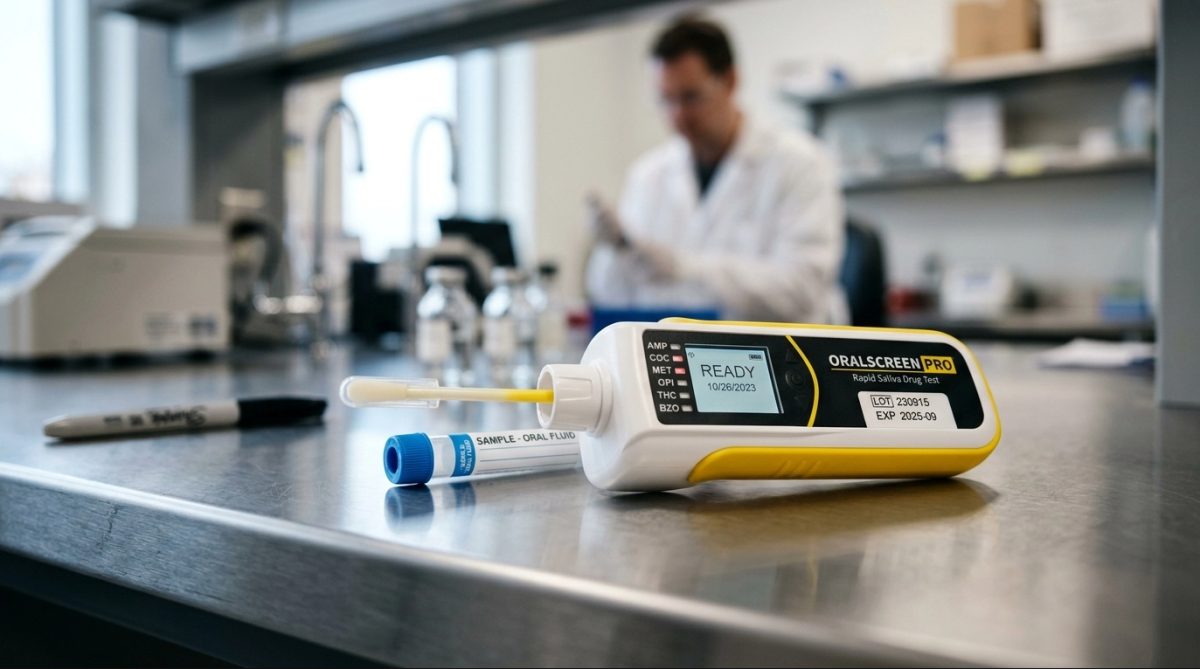
Oral fluid testing, often referred to as "swab testing," represents a major step forward in the modernization of DOT safety regulations. Unlike urine testing, which requires a private stall, oral fluid collection is conducted under direct observation by the collector at all times. This process involves the driver placing a collection device in their mouth for several minutes until a sufficient amount of saliva is gathered for laboratory analysis.
The most significant advantage of oral fluid testing is its inherent resistance to adulteration and cheating attempts. Because the collector is watching the entire process from start to finish, it is virtually impossible for a driver to use synthetic samples or additives without being caught. This level of security provides fleet managers with a higher degree of confidence in the integrity of their drug-testing results and the safety of their drivers.
Additionally, oral fluid testing is often seen as a more "driver-friendly" option because it is less invasive and eliminates the need for restrooms. It also significantly reduces the time spent at a collection site, as the "dry mouth" waiting period is much shorter than the "shy bladder" requirements for urine. This efficiency means your drivers can get back on the road faster, which is always the goal in a fast-paced industry where every minute of drive time counts toward your bottom line.
COMPARING DETECTION WINDOWS AND SCIENTIFIC ACCURACY

When choosing between these two methods, you must consider the specific "window of detection" you are targeting for your safety program. Oral fluid testing is exceptional at detecting very recent drug use, often showing positive results within minutes or hours of ingestion. This makes it a superior tool for post-accident or reasonable suspicion testing where you need to know if the driver was impaired at the exact time of an incident.
Urine testing, conversely, excels at identifying patterns of use over a longer period, making it more suitable for catching occasional users who might have abstained just before a scheduled test. The metabolites stored in the body's fat and fluids provide a historical record that oral fluid simply cannot match due to its shorter 24-to-48-hour detection window. Understanding this scientific distinction allows you to strategically use both methods to create a more robust and comprehensive safety net for your company.
It is also important to note that both methods are held to rigorous scientific standards by the Department of Health and Human Services (HHS). Regardless of which method you choose, the laboratory analysis is highly accurate and defensible in a court of law or during a DOT audit. The choice isn't about which test is "better" scientifically, but rather which one provides the specific data you need for the situation at hand.
TACKLING ADULTERATION AND THE "SHY BLADDER" PROBLEM
The "shy bladder" protocol is one of the most common administrative headaches for fleet managers across the country. When a driver cannot provide 45mL of urine, they are given up to three hours and encouraged to drink up to 40 ounces of fluid to produce a sample. This process stalls your equipment, delays your freight, and often results in a "refusal to test" if the driver leaves the site before the window is up, leading to immediate CDL disqualification.
Oral fluid testing practically eliminates this specific issue, as the collection process is not dependent on the driver’s ability to use the restroom. While "dry mouth" can occasionally occur, it is much easier to manage and rarely results in the long delays associated with urine collection. By switching to oral fluid for certain testing scenarios, you can save hours of downtime and avoid the complex paperwork associated with failed urine collections.
Quick Tip: If you have a driver who consistently struggles with shy bladder issues, keep an eye on when oral fluid labs become fully certified in your area. Switching that specific driver to oral fluid testing (once permitted by the lab network) can save you from a major compliance nightmare down the road.
WHICH METHOD IS RIGHT FOR YOUR FLEET'S SAFETY GOALS?

Deciding which method to prioritize depends on your company's specific operational needs and safety culture. If your primary concern is preventing long-term substance users from entering your fleet, continuing with urine testing for pre-employment screenings is a practical and effective strategy. The longer detection window acts as a filter, ensuring that only those who are truly committed to a drug-free lifestyle make it onto your payroll.
On the other hand, if you are focused on identifying active impairment and reducing the risk of roadside accidents, oral fluid testing is an invaluable tool. Its ability to catch very recent use is a game-changer for post-accident investigations where every detail matters for liability and insurance purposes. Many carriers are now looking at a "hybrid" approach, using urine for hiring and oral fluid for random or reasonable suspicion testing to get the best of both worlds.
The thing is, the "best" method is the one that you can actually execute consistently without breaking your budget or your schedule. You should evaluate your most frequently used collection sites to see which methods they currently support and what their turnaround times look like. Staying flexible and informed about both options ensures that you are never caught off guard by a change in laboratory availability or a shift in federal enforcement priorities.
HOW LABWORKS USA INTEGRATES BOTH TESTING SOLUTIONS

At Labworks USA, our core mission is to handle the administrative heavy lifting so you can focus on the road. We maintain a network of over 20,000 collection sites nationwide, and we are constantly updating our database to reflect which locations are equipped for both urine and oral fluid collection. Our team is dedicated to providing you with the most current information, ensuring your annual membership always keeps you on the right side of the law.
We provide comprehensive support that goes far beyond just scheduling a test, including MRO review, Clearinghouse management, and expert guidance on when to use each testing method. When the DOT officially authorized oral fluid, we immediately began working with our laboratory partners to ensure a smooth transition for our members. We believe that compliance should be a shared industry responsibility, and we are proud to be the partner that helps you navigate these complex changes with confidence.
Our online account portal allows you to manage all your testing requirements in one place, regardless of the collection method used. You can view results, track random testing percentages, and access your compliance certificates with just a few clicks. This level of transparency and ease of use is why thousands of owner-operators and carriers trust Labworks USA to manage their DOT drug and alcohol testing consortium requirements every year.
IN CONCLUSION
The choice between oral fluid and urine testing is no longer a matter of "if," but "when" and "how" you will integrate these options into your safety program. Both methods offer distinct advantages: urine for its deep historical reach and oral fluid for its speed, security, and focus on recent impairment. As the industry continues to evolve, staying updated on these changes is the only way to avoid the costly pitfalls of non-compliance.
The federal regulations are clear, but the implementation is where many companies struggle. Between managing Clearinghouse queries and keeping track of varying detection windows, the administrative burden can be overwhelming. That is why having a dedicated partner like Labworks USA is the most convenient and practical solution for today’s busy trucking professionals.
READY TO SIMPLIFY YOUR COMPLIANCE?
Don't let changing regulations slow your business down or put your CDL at risk. Labworks USA offers a streamlined, comprehensive solution for all your DOT drug and alcohol testing needs, including full support for both urine and oral fluid methodologies as they become available. Join the thousands of carriers who trust us to keep them moving safely and legally.
Our Core Services Include:
- DOT Drug & Alcohol Consortium Membership: Starting at just $199/year for owner-operators.
- FMCSA Clearinghouse Management: Full registration and query support for only $49/year.
- Access to 20,000+ Collection Sites: Find a convenient location anywhere in the lower 48 states.
- Free DOT Supervisor Training: Included for members with 5 or more drivers (a $75 value).
JOIN LABWORKS USA TODAY – CLICK HERE TO GET STARTED