 Feb 2, 2026
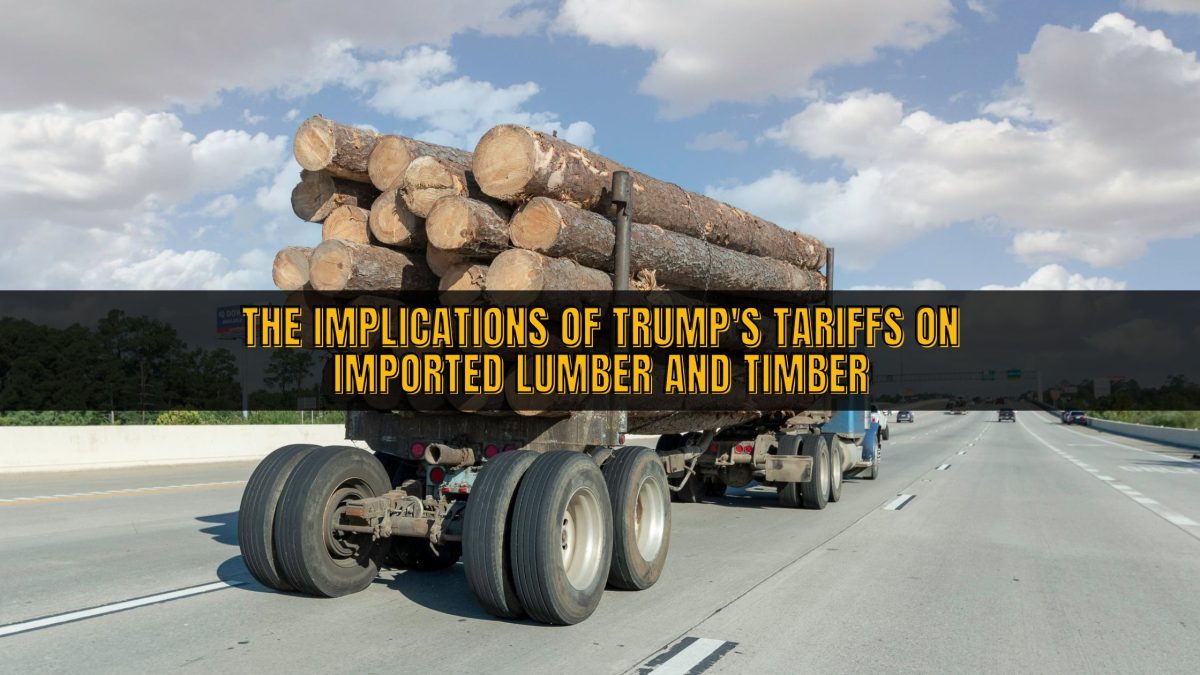
The Implications of Trump's Tariffs on Imported Lumber and Timber
In recent years, the imposition of tariffs on imported lumber and timber has emerged as a significant element of United States trade policy, particularly during the Trump administration. These tariffs, aimed primarily at curbing imports from Canada, were instituted with the intention of protecting domestic producers and bolstering the American lumber industry.
However, the implications of these tariffs extend far beyond the immediate economic interests of domestic manufacturers. They have reverberated throughout various sectors, influencing housing markets, construction costs, and consumer prices.
As stakeholders grapple with the complexities of the timber supply chain, the effects of these tariffs can be seen in fluctuations in the availability and cost of lumber, impacting everything from residential construction to furniture manufacturing. In this article, we will explore the multifaceted consequences of Trump's tariffs on imported lumber and timber, examining the economic, environmental, and social dimensions of this policy.
By analyzing both the rationale behind these tariffs and their unintended repercussions, we aim to provide a comprehensive understanding of how trade restrictions can reshape industries and affect consumers and businesses alike in the ever-evolving landscape of American trade. Let's get into this.
The Announcement of New Trade Barriers
The Trump administration has officially moved forward with the implementation of aggressive tariffs on a wide range of imported wood products. This sweeping economic policy targets essential construction materials including softwood lumber, timber, kitchen cabinets, bathroom vanities, and various forms of upholstered furniture.
According to the official presidential proclamation released from the White House, the new duties are designed to protect domestic interests from foreign competition. A strict 10% tariff has been applied to all imports of softwood lumber and timber, while finished goods like kitchen cabinets and vanities now face a much steeper 25% duty.
These tariffs became effective last year on October 14, 2025, marking a significant shift in U.S. trade policy regarding construction materials. The administration has signaled that these measures are not temporary and represent a long-term strategy to decouple American supply chains from foreign reliance.
National Security and Economic Justification
The presidential proclamation explicitly indicated that the unregulated influx of wood product imports was actively undermining the stability of the U.S. economy. Administration officials argued that this reliance posed a continuous and unacceptable threat to national supply chains, particularly in sectors required for rapid infrastructure development.
The official statement emphasized that the domestic wood industry has been adversely affected by cheaper foreign alternatives for decades. It stated, “Given the current condition of the United States wood industry, the nation may struggle to fulfill the demand for wood products essential for national defense and critical infrastructure.”
By framing the issue as a matter of national defense, the White House has utilized broad executive powers to bypass standard legislative hurdles. This approach mirrors previous strategies used for steel and aluminum tariffs, allowing for immediate implementation without congressional approval.
Impact on Canadian Softwood Lumber
This announcement is anticipated to generate significant global repercussions, with the most immediate shockwaves felt by Canada. As the foremost exporter of softwood lumber to the United States, Canadian producers are facing a renewed and costly trade dispute that could reshape the North American market.
In 2024, the United States imported approximately $11.59 billion worth of “wood and articles of wood, wood charcoal” from Canada, as reported by Trading Economics. This massive volume of trade highlights how deeply integrated the two nations' construction sectors have become over the last thirty years.
Canadian officials have already hinted at potential retaliatory measures if the duties are not reconsidered or reduced in upcoming negotiations. The relationship between the two neighbors is now strained, with lumber once again becoming a central friction point in the United States-Canada-Mexico Agreement (USMCA) discussions.
The Fallout for Global Furniture Manufacturers
Manufacturers in Vietnam, China, and Mexico—key exporters of furniture to the American market—are also preparing for severe economic consequences. These nations have become the primary hubs for affordable furniture production, displacing much of the legacy American furniture manufacturing base.
During the first half of the year leading up to the tariffs, the U.S. imported around $12.2 billion in household furniture products, according to data from Furniture Today. This influx of goods suggests that retailers were likely stockpiling inventory in anticipation of the trade barriers that have now gone into effect.
Factory owners in Vietnam and Mexico are scrambling to adjust their pricing models to absorb some of the tariff costs. However, industry experts predict that the majority of these new taxes will eventually be passed directly to American consumers in the form of higher retail prices.
Escalation Threats and Future Rate Hikes
The White House has indicated that without new trade agreements or strict adherence from foreign exporters, tariff rates could significantly increase on January 1. This ultimatum serves as a high-stakes negotiating tactic designed to force trading partners into immediate concessions regarding their export practices.
Administration sources suggest that rates could potentially reach as high as 50% on certain cabinetry items if a deal is not reached by the deadline. Such a dramatic increase would effectively ban many foreign cabinet brands from the U.S. market by making them prohibitively expensive for average consumers.
Importers are currently in a state of uncertainty, unsure whether to rush shipments before the new year or hold back orders. This volatility is causing logistical bottlenecks at major ports as companies try to navigate the shifting regulatory landscape.
Broader Context of the 2025 Trade War
This latest measure follows the imposition of tariffs on a variety of other critical sectors, including imports of pharmaceuticals and heavy-duty trucks. The administration is pursuing a comprehensive protectionist agenda that aims to revitalize American manufacturing through the systematic application of import duties.
Earlier this year, the administration announced duties on steel, aluminum, copper, and automobiles to shield heavy industry from global competition. These reciprocal tariffs are aimed at restructuring trade relationships perceived as unfavorable to the United States and reducing the national trade deficit.
Economic analysts note that while these individual tariffs target specific industries, their cumulative effect creates a complex web of costs for downstream businesses. The synergy between higher steel costs and higher wood costs is expected to hit the commercial construction sector particularly hard in the coming quarters.
Critics Warn of Consumer Price Inflation
Critics of the tariffs have expressed deep concerns that these new duties may drive up costs for American consumers and builders at a time when housing affordability is already at a crisis point. Organizations representing home builders argue that taxing lumber is essentially a tax on every new home built in America.
The National Association of Home Builders (NAHB) has historically argued that lumber tariffs add thousands of dollars to the price of a typical single-family home. With the addition of tariffs on cabinets and furniture, the total cost of outfitting a new home is expected to rise disproportionately compared to general inflation.
Economists warn that these artificial price hikes could slow down the housing market by making renovations and new construction projects financially unfeasible for middle-class families. If demand for housing softens due to high material costs, the policy could backfire by hurting the very domestic industries it aims to protect.
The Safety Debate: Trucking Industry Implications
Former U.S. Representative Matt Cartwright (D-Pennsylvania) warned that safety could be compromised due to the parallel implementation of new truck import tariffs. His concerns highlight an often-overlooked side effect of trade wars: the degradation of operational safety when companies are forced to cut costs.
“Tariffs are fundamentally misguided; they essentially function as a tax that American citizens bear,” Cartwright argued, emphasizing the downstream effects on local businesses. He noted that while the policy claims to target foreign entities, the actual financial pain is felt by domestic operators who rely on imported equipment.
Cartwright explained that the administration may attempt to frame this as an attack on Mexico or China, but the reality is much broader and more damaging. “Imposing tariffs on all imported trucks includes brands like Volvo, Mercedes, BMW, and Japanese manufacturers, ultimately placing the financial burden on trucking companies,” Cartwright stated in an email to FreightWaves.
Operational Risks for Trucking Companies
As an attorney at Munley Law in Scranton, Pennsylvania, which specializes in truck accident cases, Cartwright added valuable legal insight into the risks facing the logistics sector. He pointed out that the trucking industry is notoriously low-margin, meaning any increase in equipment costs has immediate negative impacts on operational budgets.
“Many of these companies operate on very tight budgets, and when costs rise, the first areas to be cut are often safety measures,” Cartwright noted. He fears that fleet managers will extend the lifecycle of older, less safe trucks rather than paying the inflated prices for new, tariffed vehicles.
This deferral of upgrades can include cutting vital investments in maintenance, training, and ensuring drivers meet safety standards, all of which require substantial funding. The correlation between aging equipment and increased accident rates is well-documented, raising fears of a future spike in highway fatalities.
The "Kitchen Table" Impact on Homeowners
For the average American homeowner, the tariffs on vanities and kitchen cabinets will likely be the most visible result of this policy. Kitchen renovations, which are among the most popular home improvement projects, rely heavily on affordable "ready-to-assemble" (RTA) cabinets often imported from Southeast Asia.
Contractors are already advising clients to lock in quotes now before the potential January 1 rate hikes take effect. The price volatility is making it difficult for small remodeling businesses to offer fixed-price contracts, leading to frustration for both service providers and customers.
There is also a concern that domestic manufacturers may use the tariff cover to raise their own prices, rather than keeping them low. With foreign competition artificially priced out of the market, U.S. cabinet makers have less incentive to offer competitive discounts to consumers.
Logistics and Supply Chain Disruptions
The freight and logistics industry is bracing for a chaotic period as importers try to navigate the new customs requirements. Customs brokers are reporting a surge in inquiries regarding tariff classification, as companies try to find loopholes or exemptions for their specific wood products.
Warehouses near major ports are filling up rapidly as retailers attempt to "pull forward" inventory before any further escalation. This surge in demand for storage space is driving up warehousing costs, which further contributes to the inflationary pressure on the final retail price.
Freight carriers are also dealing with the uncertainty of the heavy-duty truck tariffs mentioned by Cartwright, creating a "double whammy" for the logistics sector. Shipping the wood products is becoming more expensive just as the wood products themselves are increasing in price.
Reddit and Social Media Sentiment
On platforms like Reddit, users in communities such as r/HomeImprovement and r/Construction are actively discussing the real-world implications of these cost increases. Many DIY enthusiasts are expressing frustration that their planned budget renovations are now significantly out of reach due to the sudden price jumps.
Threads on r/Truckers are echoing Matt Cartwright's concerns, with drivers speculating about the potential for reduced fleet maintenance and wage stagnation. The sentiment online is largely skeptical of the "protectionist" benefits, with many users feeling that the costs are simply being passed down to the working class.
Search trends indicate that consumers are increasingly looking for "USA made cabinets" and "lumber price forecast 2026" as they try to adapt to the new market reality. The digital discourse highlights a growing disconnect between the administration's high-level economic goals and the immediate financial reality for voters.
Conclusion: A Precarious Economic Standoff
The Trump administration's decision to impose tariffs on wood products marks a significant escalation in its protectionist trade strategy, with far-reaching consequences for the global economy. By targeting critical sectors like lumber and furniture, the White House is betting that the long-term growth of domestic industry is worth the short-term pain of higher consumer prices.
However, the warnings from industry experts and legal professionals like Matt Cartwright suggest that the collateral damage—ranging from housing inflation to highway safety risks—could be severe. As the January 1 deadline for potential rate increases approaches, all eyes are on the administration to see if they will double down or negotiate a compromise.
Stay Ahead of Industry Shifts with Labworks USA
Navigating the complex landscape of trade tariffs and regulatory changes requires constant vigilance and access to the latest industry intelligence. If you want to stay updated with a wide range of trends, actionable insights, and innovative solutions in the trucking, freight, and logistics industry, stay connected to us.
Moreover, if you are looking for more information about drug and alcohol testing as a truck driver, visit Labworks USA. Our DOT Consortium's friendly team will be more than happy to discuss any concerns you may have and work with you to ensure you are always fully compliant, especially with random DOT drug and alcohol testing. Moreover, if you need help with FMCSA Clearinghouse registration, we can further support you.