
 Aug 27, 2024
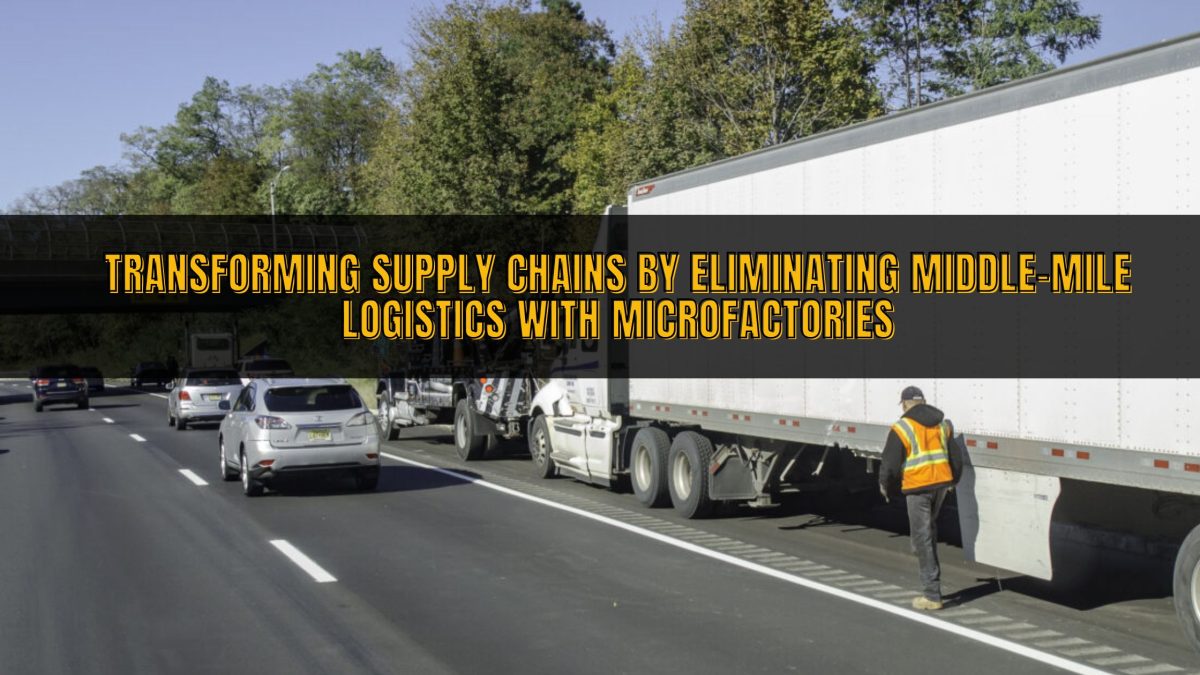
Transforming Supply Chains by Eliminating Middle-Mile Logistics with Microfactories
In the rapidly evolving landscape of global supply chains, the quest for efficiency and sustainability has prompted a significant re-evaluation of traditional logistics models.
As organizations strive to meet consumer demands while mitigating environmental impact, the concept of relocalizing production has emerged as a promising solution.
This article delves into the innovative approach of micro factories, which decentralize manufacturing and bring production closer to the point of consumption.
By minimizing reliance on complex middle-mile logistics, businesses can enhance responsiveness, reduce carbon footprints, and foster local economies. Furthermore, this paradigm shift not only addresses pressing supply chain vulnerabilities exposed by recent global disruptions but also aligns with a growing consumer preference for sustainable and locally sourced products.
As we explore the intricacies of this transformative model, we will examine the technological advancements that facilitate micro-factory operations, the strategic considerations for businesses looking to implement this approach, and the broader implications for supply chain resilience and sustainability.
In doing so, we aim to provide a comprehensive understanding of how relocalization can redefine the future of supply chains in a world increasingly focused on efficiency and environmental stewardship.
Digitizing mid- and last-mile logistics handovers to reduce waste
Even in a highly efficient logistics network, there remains a considerable amount of waste. A significant portion of this waste occurs during what can be termed “blind handoffs”—the points at which goods are transferred among various stakeholders, including manufacturers, warehouses, retail outlets, and consumers. These junctures are particularly susceptible to costly miscommunications, information loss, and delays. According to a McKinsey analysis, between 13 and 19 percent of logistics expenses may arise from these inefficient exchanges, translating to potential losses of up to $95 billion annually in the U.S. economy alone.
Traditionally, shippers and carriers have sought to mitigate waste by enhancing visibility throughout their logistics chains through the adoption of real-time transportation visibility platforms (RTTVP). The market for these technologies has seen rapid growth, with startups focusing on visibility solutions securing approximately $7 billion in funding since 2022. This reflects a strong industry interest in waste reduction. While improving visibility is crucial, there may be additional opportunities to optimize the handoff points where waste occurs, particularly by facilitating seamless coordination and communication during the transfer of goods.
Technology firms, along with shippers and carriers, are actively working on software solutions designed to improve coordination and communication. In addition to RTTVP, two other innovative solutions have emerged: AI-driven workflow automation and generative AI-based contextual communication. Our analysis indicates that effectively combining these three technologies can reduce waste associated with blind handoffs by as much as 40 percent.
However, relying solely on technology may not suffice to achieve this level of waste reduction. Companies will likely need to assess their handover losses, explore integration of the relevant solutions into their existing operational frameworks and technology infrastructures, and develop new digital capabilities to fully harness the benefits.
Both B2B and B2C carriers stand to gain significantly by addressing issues related to blind handoffs, with numerous success stories showcasing companies that have successfully lowered their operating costs. This article examines these three emerging solutions and highlights best practices specifically relevant to middle- and last-mile logistics, while first-mile or intermodal logistics remain the focus of our ongoing research into different segments of the logistics value chain.
While the findings discussed here pertain specifically to the United States, the overarching themes are relevant to logistics operations worldwide.
Understanding Waste: Origins and Costs
Blind handoffs occur at various stages throughout the logistics chain, impacting both B2C and B2B deliveries. Our research estimates that in the U.S., the total value of middle- and last-mile deliveries across e-commerce, food and beverage, and consumer retail and packaged goods will reach approximately $485 billion in 2021.
Within this financial landscape, waste generated from interactions among shippers, dispatchers, third-party logistics providers (3PLs), and carriers at the point of delivery is estimated to be between $65 billion and $95 billion. Most of these losses are incurred by B2B companies, with estimates ranging from $45 billion to $66 billion annually. B2C losses may account for an additional $18 billion to $28 billion each year, primarily driven by the costs associated with excessive dwell time.
Waste consists of both direct and indirect costs. Direct costs include:
- Communication: For B2C carriers, direct communication expenses can represent up to 0.5 percent of revenue, largely stemming from the approximately 6,000 customer service agents in the U.S. dedicated to logistics issues. About 70 percent of their time is spent resolving problems related to blind handoffs. In B2B logistics, approximately 50,000 dispatchers face similar challenges.
- Detention or Dwell Time: For B2C carriers, this can account for 3 to 5 percent of revenue, with 160 million hours attributed to unnecessary dwell time annually. In B2B operations, this figure reaches approximately 850 million hours each year.
- Lost and Stolen Packages: Each year, B2C carriers deliver around 23 billion packages in the U.S., with 1.5 percent lost or stolen during last-mile delivery. In B2B, this rate is significantly lower at 0.1 percent.
- Re-deliveries: B2C carriers incur re-delivery costs equivalent to 1 to 3 percent of revenue, with about 10 percent of last-mile packages requiring re-delivery. This cost is minimal in B2B logistics.
These challenges also lead to indirect costs, particularly in terms of customer dissatisfaction and diminished re-ordering rates. Delivery issues significantly heighten customer dissatisfaction; for instance, 88 percent of consumers abandon online shopping carts due to unsatisfactory shipping terms, and 85 percent indicate they would not shop with a retailer again following a poor delivery experience.
Additional indirect costs encompass driver dissatisfaction, environmental repercussions from fuel waste during dwell time and re-deliveries, and productivity losses due to inefficient vehicle utilization and operational inefficiencies within warehouses and processing centers.
The financial impact of waste during blind handoffs is most acutely felt by carriers, constituting between 6 and 13 percent of their overall revenue. Even if customers are not directly responsible for these costs, they ultimately bear the consequences through increased pricing and wasted time. Our analysis suggests that U.S. customers collectively spend hundreds of millions of hours annually tracking lost packages.
An effective handoff hinges on four essential capabilities: standardized processes supported by user-friendly platforms, real-time collaboration and communication, seamless inter-party communication, and minimal personnel engagement.
Coordination Methods in Logistics
Investigations reveal that current communication and coordination methods in logistics often fall short of fully meeting these needs. The predominant method involves text messaging between two parties, resulting in reactive updates for shippers. While this approach incurs relatively low costs, which are often subsidized by carriers, it lacks real-time collaboration and cross-party communication. Moreover, it necessitates significant in-person engagement, potentially compromising driver safety.
The next most prevalent method involves a series of phone calls between two parties, also leading to reactive updates. This method shares similar advantages and disadvantages as text messaging, with the added concern of driver safety.
A more recent but less widely adopted method utilizes multiple delivery management applications to coordinate between parties. These platforms offer real-time updates, providing shippers with periodic information via emails or tracking links. However, their usage remains low, and costs are relatively high (ranging from $20 to $45 per driver). While this approach facilitates real-time collaboration, it still requires significant in-person engagement and presents challenges in usability and cross-party communication.
Three Innovative Software Solutions to Mitigate Waste in Logistics
The logistics sector is witnessing a wave of innovative software solutions designed to streamline operations and minimize waste. Since 2012, these advancements have garnered approximately $12 billion in investments, underscoring their potential impact.
1. Real-Time Transportation Visibility Platforms (RTTVPs)
RTTVPs are primarily focused on enhancing logistics visibility. These platforms employ advanced Application Programming Interfaces (APIs), real-time tracking, and predictive analytics to offer comprehensive insights into logistics operations. They are supported by delivery management systems that empower drivers to efficiently plan and execute their routes. The key benefits of RTTVPs include increased transparency throughout the delivery process, optimization of previously inefficient routes, and improved customer engagement by providing them with near real-time updates on their shipments.
Currently, RTTVPs represent the most established category, with 178 companies operating in this space within the United States. Analysis shows that approximately 80% of U.S. carriers have integrated some form of RTTVP into their operations.
2. AI-Powered Workflow Automation
Emerging solutions focused on AI-driven workflow automation are designed to simplify complex logistics scheduling and enhance routing efficiency. These systems can also serve as digital assistants for customer service representatives, enabling real-time alerts, addressing inquiries, and dynamically adjusting routes in response to emerging issues.
As a newer category compared to RTTVPs, there are currently 53 companies in the U.S. offering AI-based workflow automation solutions. Since 2012, this sector has attracted $2.9 billion in investments.
3. Generative AI-Enabled Contextual Communication
The latest advancement in logistics technology comes from generative AI-driven contextual communication solutions. Having received $1.7 billion in funding since 2012, this category includes 13 U.S.-based firms. These innovations address delivery challenges by fostering a comprehensive understanding of the context surrounding deliveries, facilitating real-time, multi-party communication among shippers, carriers, and recipients. Notable advantages include minimizing miscommunication, enhancing the efficiency of customer service agents through autonomous functionalities, and decreasing the reliance on manual interventions from drivers and dispatchers.
Various logistics companies are already leveraging one or more of these solutions, yielding significant improvements in operational efficiency and customer satisfaction, as evidenced by Ryder's successes highlighted in a sidebar.
Synergizing Solutions for Greater Impact
The effectiveness of these technologies in addressing blind handoffs is influenced by the specific business model, fleet size, and operational challenges of the adopting company. While each solution offers distinct advantages, a strategic combination could amplify their collective benefits.
Given that RTTVP is the most mature technology among these options, it represents a logical starting point for companies looking to implement new technologies aimed at improving blind handoffs. However, many logistics providers already utilize some form of RTTVP. A recent McKinsey survey indicated that tools enabling real-time visibility and fleet management telematics have seen significant adoption and investment from over 250 logistics firms as of May 2023.
Once visibility tools are established, organizations can enhance their operational capabilities by integrating AI solutions for process automation and, potentially, generative AI applications for drivers. Some visibility providers are actively incorporating these advanced features into their platforms.
The integration of these technologies has the potential to reduce direct costs for carriers by 35 to 40 percent and indirect costs by 25 to 45 percent.
However, technological innovations alone may not suffice to unlock their full value—successful implementation is contingent upon effective change management practices.
While carriers and shippers are gradually embracing these innovations, there remains untapped potential. Organizations may face challenges in deploying these technologies effectively due to lack of strategic cohesion, necessary capabilities, or widespread adoption. To facilitate successful tech integration, companies should consider the following steps:
- Establish Strategic Alignment: Evaluate the potential value and efficiencies that new technologies could unlock while understanding current operational frameworks. Effective change management, including staff training and clarifying future operational procedures, will be crucial.
- Achieve Scalable Adoption: Develop a comprehensive implementation roadmap that incorporates change management best practices. A phased approach, rather than a sudden overhaul, is advisable to align with existing operations and mitigate risks.
- Build Organizational Capabilities: Tailor solutions to fit the unique complexities of each organization's environment. Setting key performance indicators (KPIs) can help measure improvements, such as reduced driver dwell time or enhanced driver satisfaction.
Addressing the challenges posed by blind handoffs is vital, as these issues can cost the logistics industry an estimated $95 billion annually in wasted time and resources. Harnessing technology to tackle these problems has led to a rapidly growing market for innovative solutions.
In Conclusion
The integration of micro factories into supply chains presents a transformative opportunity to eliminate middle-mile logistics, effectively streamlining operations and enhancing efficiency. By facilitating localized production and reducing reliance on traditional distribution methods, businesses can respond more swiftly to market demands while minimizing costs and environmental impact. As we continue to navigate the complexities of global supply chains, embracing innovative solutions like microfactories will be crucial for organizations striving to remain competitive in an ever-evolving landscape. The future of supply chain management lies in agility and sustainability, and microfactories are at the forefront of this pivotal shift.
If you want to stay updated with a wide range of trends, actionable insights, and innovative solutions in the trucking, freight, and logistics industry, stay connected to us.
Moreover, If you are looking for more information about drug and alcohol testing as a truck driver, visit LabWorks USA.
Our DOT Consortium's friendly team will be more than happy to discuss any concerns you may have and work with you to ensure you are always fully compliant, especially with random DOT drug and alcohol testing. Moreover, if you need help with FMCSA Clearinghouse registration, we can further support you.