
 May 15, 2024
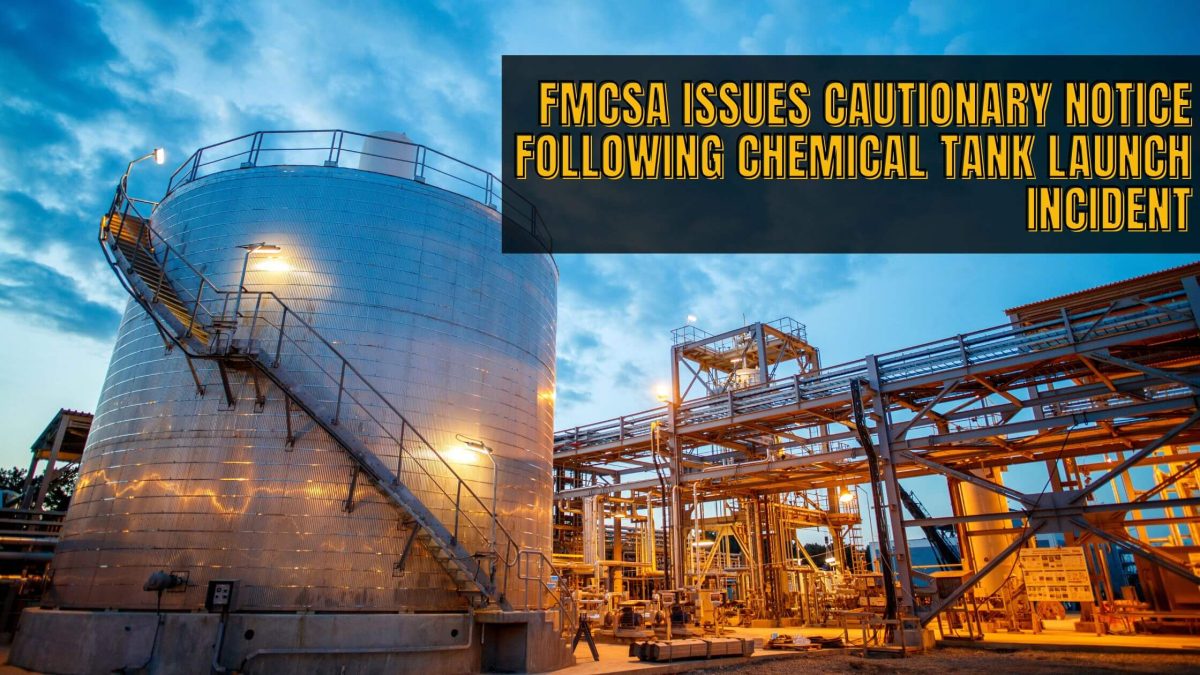
FMCSA Issues Cautionary Notice Following Chemical Tank Launch Incident
The Federal Motor Carrier Safety Administration (FMCSA) has recently issued a power unit cautionary notice to transportation companies and drivers following a chemical tank launch incident. This incident, which occurred on a major highway, resulted in the release of hazardous chemicals and posed a serious threat to public safety.
As a regulatory environmental protection agency responsible for overseeing the safety of commercial motor vehicles and commercial motor vehicle drivers, the FMCSA has deemed it necessary to bring attention to this incident and remind all stakeholders of the importance of adhering to safety regulations.
This article will provide a detailed overview of the incident, the potential consequences that could have occurred, and the actions being taken by the FMCSA to prevent similar incidents from happening in the future.
Additionally, we will explore the potential impact of this incident on the transportation industry and the current standard methods online or steps that companies and drivers can take to ensure the safe transportation of hazardous materials. As the FMCSA continues to prioritize safety on our roads, it is important for all parties involved in the transportation of hazardous materials to stay informed and vigilant in their management practices or operating practices.
Specific Types of Hazardous Chemical Tanks
Federal regulatory agencies strongly advise owners of specific types of hazardous chemical tanks to voluntarily conduct tests due to the potential for catastrophic failure, based on recent test findings.
In a joint advisory issued by the Federal Motor Carrier Safety Administration and the Pipeline and Hazardous Materials Safety Administration, concerns have been raised regarding the stability of "nurse tanks" primarily used for transporting anhydrous ammonia across public roadways and agricultural fields. These concerns arose following an incident that occurred in August 2023 at a farm co-op facility.
The failure of an American Welding and Tank (AWT) manufactured nurse tank resulted in the tank shell forcefully ejecting over 300 feet from its original position, as confirmed by the aforementioned agencies.
Although no injuries were reported in this sampling events, sample events or particular event, it serves as an alarming indication of potential ongoing issues with AWT nurse tanks, which have been in service for more than a decade.
An Immediate Comment
AWT was unable to provide an immediate comment when approached regarding the matter. Subsequently, the tank owner engaged a third-party testing company to investigate the situation. The findings revealed that out of the eight other nurse tanks owned by the owner, which were manufactured between 2008 and 2012, seven exhibited severe stress corrosion cracking.
The parent company of the farm co-op also conducted extensive tests on 142 AWT nurse tanks manufactured between 2007 and 2012. Shockingly, 100 of these tanks failed the test, while all tanks manufactured in 2012 passed, as confirmed by FMCSA and PHMSA.
It is noteworthy that the current hazardous materials regulations do not mandate periodic inspection and testing of nurse tanks with American Society of Mechanical Engineers (ASME) identification plates, provided they meet all other monitoring requirements, reporting requirements, certification requirements, and applicable requirements in paragraphs. The regulatory agencies explicitly state that the obligation for seasonal period inspection and testing of nurse tanks only arises when the ASME plate is missing or illegible.
Notwithstanding this exemption, FMCSA and PHMSA strongly advocate that owners of AWT nurse tanks produced from January 1, 2007, to December 31, 2011, carry out voluntary periodic visual inspection, thickness testing, and pressure testing, as stipulated by federal regulations.
Unable To Conduct
In cases where owners of affected AWT nurse tanks are unable to conduct voluntary pressure testing, FMCSA and PHMSA recommend the alternative option of radiographic or ultrasonic testing. The discretion to determine the inspection and testing period lies with the nurse tank owner, although FMCSA and PHMSA suggest conducting the inspection and testing at least once every five years, in conformity with the existing regulations.
Furthermore, the advisory highlights that AWT nurse tanks manufactured between 2009 and 2010 had previously come under scrutiny during an FMCSA investigation and enforcement action due to improper manufacturing procedures.
A Comprehensive Investigation
According to a comprehensive investigation conducted by the FMCSA in 2013, it was revealed that a significant portion of the nurse tanks currently employed across the United States, estimated to be around 200,000 in number, boast a remarkable age range of 30 to 50 years. Disturbingly, this study also unearthed a distressing fact that numerous instances of catastrophic failures were directly responsible for inflicting severe harm, including substantial property damage, grave injuries, and even tragic loss of life.
In Conclusion
In light of the recent chemical tank launch incident, the FMCSA has issued a cautionary notice to all carriers and drivers to remain vigilant and follow proper safety protocols when transporting hazardous materials. Safety is the top priority for the FMCSA and they urge all those in the industry to take the necessary precautions to prevent similar accidents from occurring.
By following regulations and procedures, we can ensure the safety of both drivers and the public. Stay informed and stay safe.
If you want to stay updated with a wide range of trends, actionable insights, and innovative solutions in the trucking, freight, and logistics industry, stay connected to us.
Moreover, If you are looking for more information about drug and alcohol testing as a truck driver, visit LabWorks USA.
Our DOT Consortium's friendly team will be more than happy to discuss any concerns you may have and work with you to ensure you are always fully compliant, especially with random DOT drug and alcohol testing. Moreover, if you need help with FMCSA Clearinghouse registration, we can further support you.