 May 2, 2024
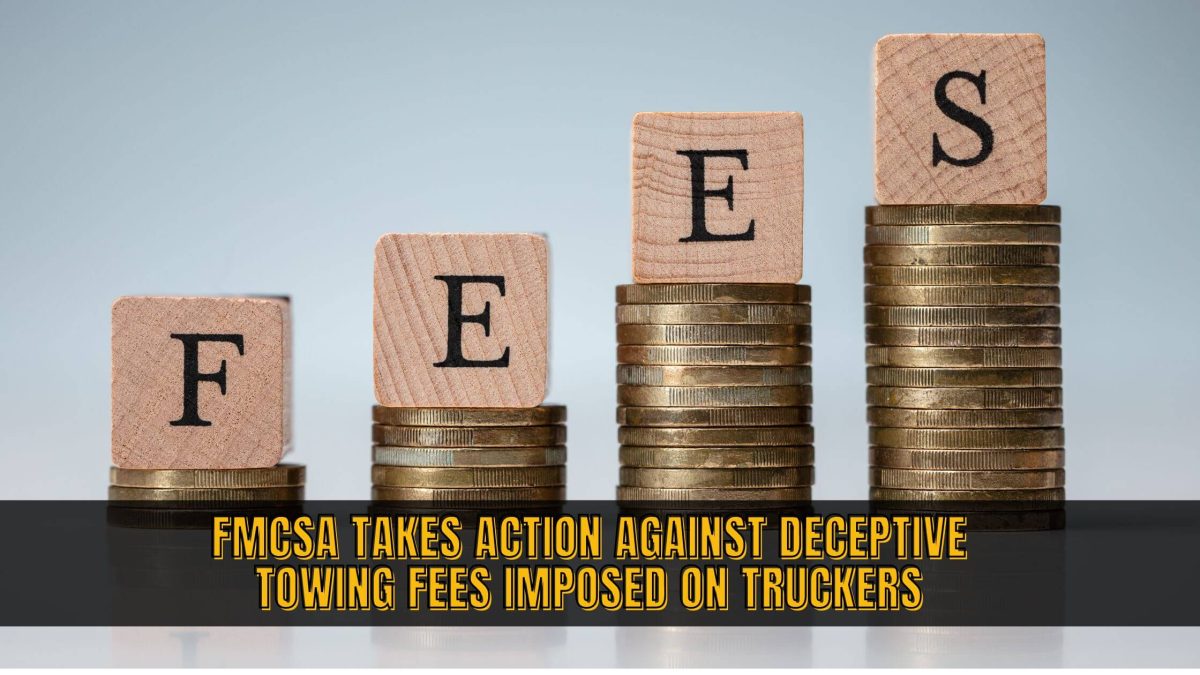
FMCSA Takes Action Against Deceptive Towing Fees Imposed on Truckers
The Federal Motor Carrier Safety Administration (FMCSA) has recently taken regular audits or action against the deceptive towing fees imposed on truckers across the country. In response to numerous complaints from truckers about exorbitant and unjustified towing costs, the FMCSA has launched an investigation into the practices of towing companies.
The trucking industry plays a crucial role in the interstate transportation intermediary of goods and services, and the FMCSA is committed to ensuring that truckers are not burdened with dishonest and excessive fees that can negatively impact their livelihoods.
This article will explore the actions taken by the FMCSA to protect truckers from these deceptive practices and the potential impact it will have on the industry.
Additionally, it will shed light on the issue of regulatory requirements, applicable requirements, the predatory towing and its effects on the trucking community, as well as the steps being taken to prevent it. With the support and collaboration of the FMCSA, it is expected that these proof of insurance and measures will bring about savings to industry and positive changes in the towing industry and provide truckers with the protection they deserve.
A Proposed Rule
The Federal Motor Carrier Safety Administration has taken notice of a proposed rule introduced by the Federal Trade Commission to combat unjustified charges imposed on consumers. The rule, which was issued last year, aims to empower the FTC in pursuing penalties against fraudulent entities and securing single trade and financial remedies for affected consumers.
In response to this proposal, the FMCSA has specifically highlighted the issue of unscrupulous towing companies that exploit truck drivers who require assistance following various incidents, including accidents. These towing companies have been known to overcharge excessively, causing significant financial harm to both individual drivers and trucking companies.
FMCSA's Acting Deputy Administrator, Sue Lawless, emphasizes the detrimental impact of predatory towing on consumers, particularly within the commercial motor vehicle drivers sector. She asserts that the prevalence of excessive rates, surcharges, and unfair fees associated with predatory towing poses a significant threat to the overall well-being of the trucking industry.
Thus, it is imperative to put an end to such practices.
Numerous Fee Practices
In the comments submitted to the Federal Trade Commission (FTC) on Wednesday, business day, Lawless highlighted numerous fee practices employed by predatory towers that have the potential to be unfair or deceptive. These practices encompass concealing fees until the completion of the job, charging for unnecessary or valueless services, and imposing an excessive number of fees for exorbitant excessive amounts. Lawless emphasized that these practices can accumulate to thousands of dollars.
Lawless further noted that once their vehicles have been towed, truck owners and operators find themselves in a highly vulnerable position, making them susceptible to predation. Predatory towing companies exploit their possession of the vehicle as leverage to engage in price gouging and prey upon commercial drivers who lack the means to resist.
Lawless contended that such practices fall within the scope of the proposed economic regulation, which would greatly benefit truckers if it were to be finalized.
The Most Prevalent Forms
According to a study published by the American Department of Transportation Research Institute in November, excessive rates and unwarranted additional service charges were identified as the most prevalent forms of predatory towing, experienced by 82.7% and 81.8% of surveyed private motor carriers, respectively.
The ATRI study also revealed that 29.8% of invoices contained either excessive rates or excessive additional charges. Approximately half of these cases involved exorbitant rates for equipment, labor, or storage, while the other half consisted of exorbitant miscellaneous or administrative charges.
In support of prohibitions or restrictions on excessive fee practices, the Federal Motor Carrier Safety Administration (FMCSA) encouraged the FTC to focus on consumers who possess limited or no capacity to avoid, negotiate, decline, anticipate, or restrict the number or cost of fees. This includes consumers who are vulnerable, distressed, or constrained in their choices due to their circumstances.
The FMCSA proposed that a final rule should treat each illegal junk fee as a separate violation. Additionally, the agency recommended that the final rule explicitly forbid companies from charging or collecting fees that are not appropriately disclosed, not included in the total price, or cannot be fully calculated in advance.
The Extensive Cross-State Operations
Furthermore, due to the extensive cross-state operations undertaken by truck drivers, the Federal Motor Carrier Safety Administration (FMCSA) has formally sought the expertise of the Federal Trade Commission (FTC) to offer safety oversight, valuable insights and recommendations regarding the potential implications of the proposed economic regulation on the diverse array of applicable state laws and local legislations pertaining to towing service charges.
This collaborative effort aims to ensure comprehensive guidance is provided, either through the definitive ruling or through subsequent interpretive directives, thereby facilitating a harmonious integration of the proposed regulation within the towing industry's regulatory landscape.
In Conclusion
The FMCSA's monitoring actions or remedial actions against deceptive towing fees imposed on truckers is a step in the right direction towards ensuring fair and ethical practices in the trucking industry. By holding companies accountable for their monitoring actions or corrective actions and protecting the rights and financial well-being of truck drivers, the FMCSA is working towards a safer and more transparent trucking industry.
It is important for both trucking companies and drivers to be aware of and comply with these regulations in order to maintain a fair and honest business district environment. The FMCSA's efforts are commendable and we can hope to see continued progress in promoting fairness and integrity in the trucking industry.
If you want to stay updated with a wide range of trends, actionable insights, and innovative solutions in the trucking, freight, and logistics industry, stay connected to us.
Moreover, If you are looking for more information about drug and alcohol testing as a truck driver, visit LabWorks USA.
Our DOT Consortium's friendly team will be more than happy to discuss any concerns you may have and work with you to ensure you are always fully compliant, especially with random DOT drug and alcohol testing. Moreover, if you need help with FMCSA Clearinghouse registration, we can further support you.