 Aug 10, 2026
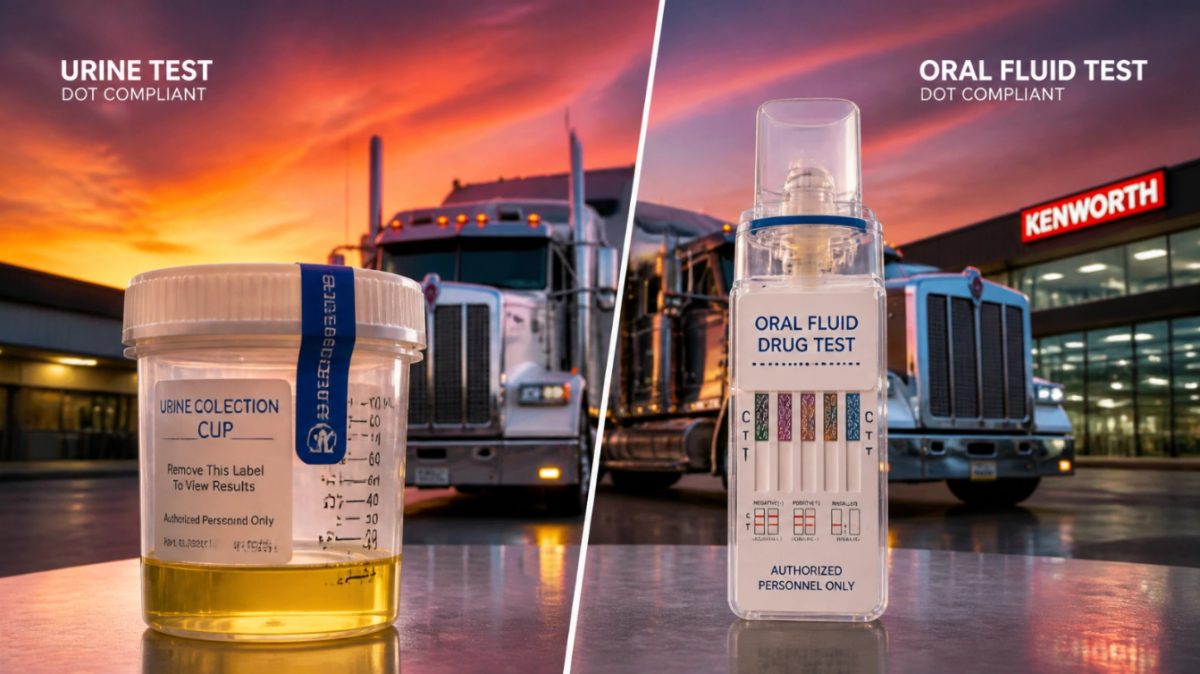
Urine Vs Oral Fluid: Which Drug Testing Method Is Better For Your Small Fleet?
As a small fleet owner or an owner-operator, staying on top of DOT regulations often feels like a full-time job on its own. One of the most significant shifts in the industry recently has been the introduction of oral fluid testing as an alternative to the traditional urine sample. While the Federal Motor Carrier Safety Administration (FMCSA) has officially authorized this method, many carriers are left wondering which path is best for their specific operations.
The choice between urine and oral fluid testing isn't just about convenience; it’s about choosing a strategy that protects your CDL and your business. Each method has distinct advantages regarding detection windows, cost, and the potential for cheating. Understanding these differences is the first step toward building a robust safety culture that keeps your trucks moving and your drivers compliant.
At Labworks USA, we understand that you need practical solutions rather than just a list of rules. Whether you are sticking with the tried-and-true urine test or preparing to transition to oral fluid, we are here to handle the administrative heavy lifting. Let’s dive into the specifics so you can make an informed decision for your fleet’s future in 2026 and beyond.
UNDERSTANDING THE 2026 REGULATORY LANDSCAPE
As of mid-2026, the Department of Transportation (DOT) has authorized the use of oral fluid testing, but there is a major catch that small fleets need to understand. For an oral fluid test to be used for a DOT-mandated event, the laboratory processing it must be certified by the Department of Health and Human Services (HHS). Currently, the industry is waiting for a sufficient number of labs to achieve this certification to make the method fully operational for everyone.
This means that while the rules are on the books, most carriers are still primarily using urine testing for their random, pre-employment, and post-accident requirements. You cannot simply switch to oral swabs today without verifying that your Consortium Third-Party Administrator (C/TPA) and lab network are fully equipped and certified. It is a transitional period where staying in touch with your compliance partner is absolutely critical to avoid unintentional violations.
The thing is, the DOT is pushing for this change to close loops on specimen tampering and to provide a "shy bladder" alternative. Once the lab infrastructure is fully caught up, you will have the flexibility to choose the specimen type that best fits the situation. For now, maintaining a compliant urine testing program remains the legal standard for the vast majority of small fleets across America.
Quick Tip: Always check with your C/TPA before attempting to implement oral fluid testing to ensure the lab they use is HHS-certified for that specific specimen type.
THE PROS AND CONS OF URINE TESTING
Urine testing has been the gold standard for DOT compliance for decades, and for good reason. It is widely available at over 20,000 collection sites nationwide, meaning your drivers rarely have to go far out of their way to find a clinic. This established network makes it the most predictable and accessible option for small fleets that need to get a driver back on the road quickly.
- Pro: Long detection window (up to several days or weeks for some substances).
- Pro: Lower per-test cost due to high volume and lab competition.
- Pro: Familiarity among drivers, collectors, and Medical Review Officers (MROs).
- Con: Vulnerable to substitution, dilution, or "cheating" products.
- Con: "Shy bladder" issues can lead to hours of driver downtime at a clinic.
However, the primary drawback of urine testing is the privacy required during collection, which creates opportunities for specimen tampering. Unless a collection is "directly observed": which is often viewed as intrusive and logistically difficult: there is always a risk that a driver could attempt to circumvent the test. For a small fleet, a single tampered result can lead to massive fines and a long, expensive Return-to-Duty process that can sideline your best equipment.
THE EMERGENCE OF ORAL FLUID TESTING
Oral fluid testing, or the "mouth swab," is gaining popularity because it is almost impossible to cheat. Since the collection is performed in plain sight of the collector, there is no need for private bathrooms or the logistical headache of finding a same-sex observer for "direct observation" scenarios. This transparency provides a level of integrity that many safety managers prefer, especially for reasonable suspicion or post-accident testing.
One of the most practical benefits for a small fleet is the elimination of the "shy bladder" delay. If a driver cannot produce a urine sample, they are often required to stay at the collection site for up to three hours while drinking fluids, which is a massive waste of billable hours. Oral fluid tests take only a few minutes to collect and can be done regardless of the driver's hydration levels, keeping your logistics schedule on track.
That’s why many carriers see oral fluid as the future of roadside and onsite testing. While it has a shorter detection window: detecting use within the last few hours to a couple of days: it is much better at identifying "active" impairment. This makes it a powerful tool for ensuring that your drivers are safe and sober the moment they step into the cab of a heavy-duty Freightliner or Kenworth.

COST COMPARISON: WHAT SMALL FLEETS NEED TO KNOW
When looking at the bottom line, many small fleet owners focus solely on the price per test, but that is only part of the story. While a urine test might have a slightly lower laboratory fee, the hidden costs of driver downtime can quickly add up. If a driver is stuck at a clinic for four hours due to a "shy bladder" or a long wait, the lost revenue from that truck being stationary far outweighs a few dollars saved on the test kit.
- Direct Costs: Urine tests are currently the most affordable per-unit option.
- Efficiency Costs: Oral fluid tests reduce wait times and eliminate "shy bladder" delays.
- Violation Costs: FMCSA fines for non-compliance can exceed $19,000 per offense.
- Admin Costs: Managing multiple testing types requires a robust File Management system.
Oral fluid testing may initially carry a small premium as more labs come online, but the convenience of onsite collection can lead to significant long-term savings. Imagine being able to conduct a pre-employment test right at your terminal instead of sending a candidate to a distant clinic. For small fleets, time is money, and any testing method that reduces the "out-of-service" time for a driver is a win for the business.
Quick Tip: Focus on the "total cost of testing," which includes driver wages, fuel to reach the clinic, and the cost of potential downtime, rather than just the lab fee.
WHY YOUR CHOICE MATTERS FOR COMPLIANCE
The choice between these two methods eventually comes down to your fleet’s specific risk tolerance and operational style. Some carriers prefer urine because it catches drug use that happened days ago, providing a broader look at a driver’s lifestyle and habits. This is often preferred for pre-employment screening where you want to ensure you aren't hiring a habitual user who just happens to be clean the day of the interview.
On the other hand, oral fluid is the superior choice for identifying immediate safety risks. Because it detects the parent drug rather than just metabolites, it provides a much clearer picture of whether a driver is under the influence right now. For post-accident situations where every second of data counts, having a swab test that can be administered immediately on-site is an invaluable asset for your legal defense and safety record.
Regardless of which method you lean toward, your FMCSA Clearinghouse responsibilities remain the same. All positives, refusals, and test results must be properly documented and reported to the federal database. Managing this data across different specimen types can be a nightmare if you are doing it manually, which is why a centralized digital portal is essential for modern fleet management.

HOW LABWORKS USA SIMPLIFIES THE PROCESS
At Labworks USA, we don't believe that small fleets should have to be regulatory experts just to stay in business. We provide a comprehensive DOT Drug and Alcohol Testing Consortium that handles everything from random selections to MRO reviews. Our goal is to make compliance so seamless that you can focus on what you do best: moving freight safely and profitably across the country.
When you join our consortium, you gain access to a network of over 20,000 collection sites, giving you the flexibility to use urine testing today and transition to oral fluid as soon as it becomes practically available. We stay ahead of the 2026 rule changes so you don't have to, providing you with immediate enrollment certificates and electronic Chain of Custody forms. Our team acts as your dedicated compliance department, ensuring that every test: regardless of the specimen: meets the rigorous DOT standards.
We also offer specialized Supervisor and DER Training to help your team understand the nuances of these different testing methods. Knowing when to use an oral swab versus a urine cup can save your company from liability and keep your drivers safe. With Labworks USA, you aren't just buying a test; you are investing in a partnership that prioritizes your fleet’s longevity and safety.
IN CONCLUSION
The debate between urine and oral fluid testing isn't about finding a "winner," but about finding the right tool for the job. Urine testing remains the reliable, widely available standard for most routine compliance needs as we move through 2026. However, oral fluid offers a cheat-proof, efficient alternative that is likely to become a favorite for post-accident and reasonable suspicion scenarios once lab certifications are finalized.
As a small fleet owner, your best move is to stay flexible and stay informed. Rely on experts who live and breathe FMCSA regulations every day to guide your transition between these methods. By maintaining high standards and utilizing the latest testing technology, you protect your drivers, your equipment, and the motoring public.
Ready to simplify your compliance? Labworks USA offers the most convenient and practical solutions for owner-operators and small fleets. Check out our Annual Membership options starting at just $199, and let us handle the paperwork while you handle the road.
Industry Keywords & Resources:
- DOT Part 40 Regulations
- HHS-Certified Laboratories
- FMCSA Drug and Alcohol Clearinghouse
- Specimen Validity Testing
- Medical Review Officer (MRO)
- Consortium/Third-Party Administrator (C/TPA)
- Directly Observed Collection
- Shy Bladder Procedures